
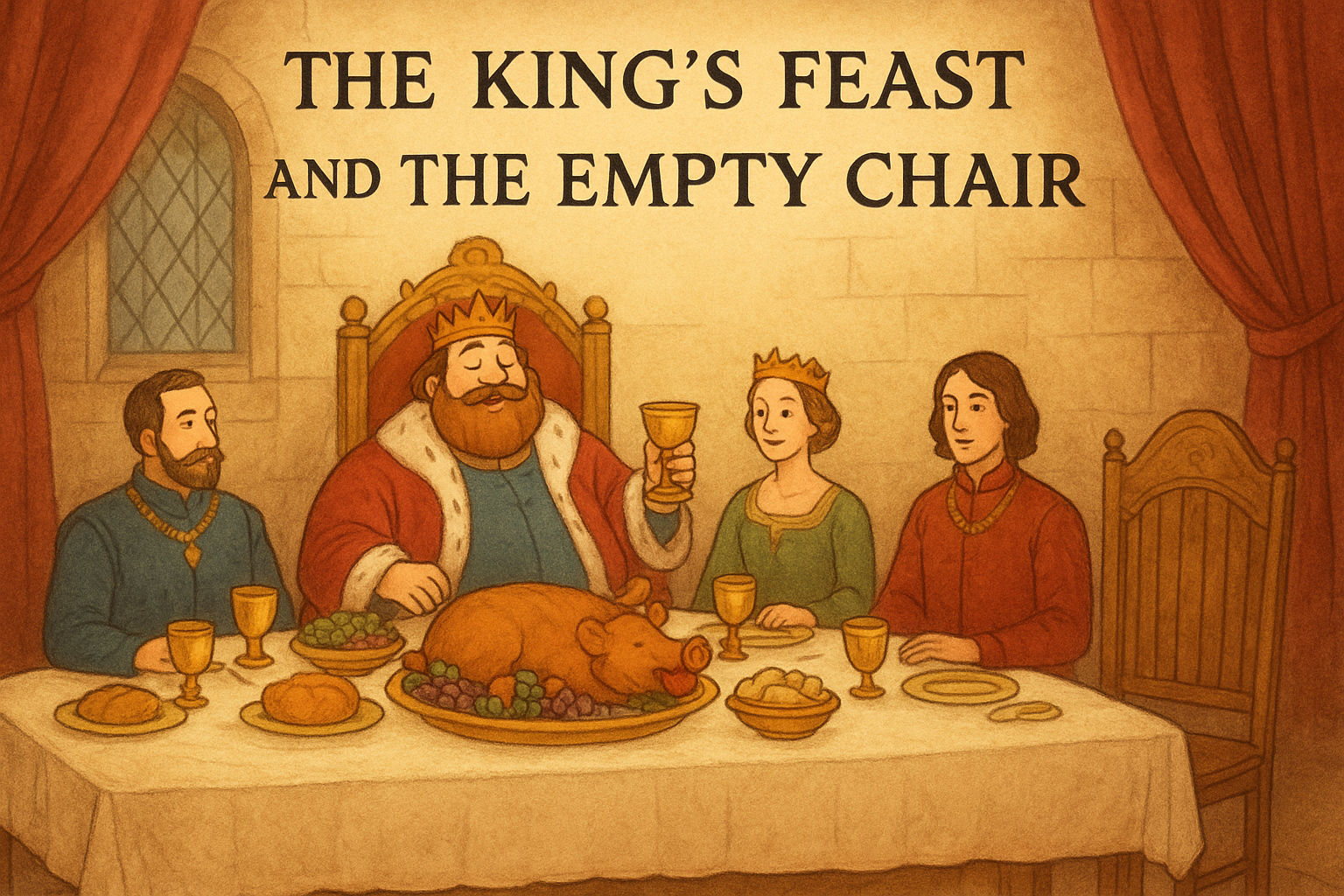
Chapter 1: The Royal Invitation
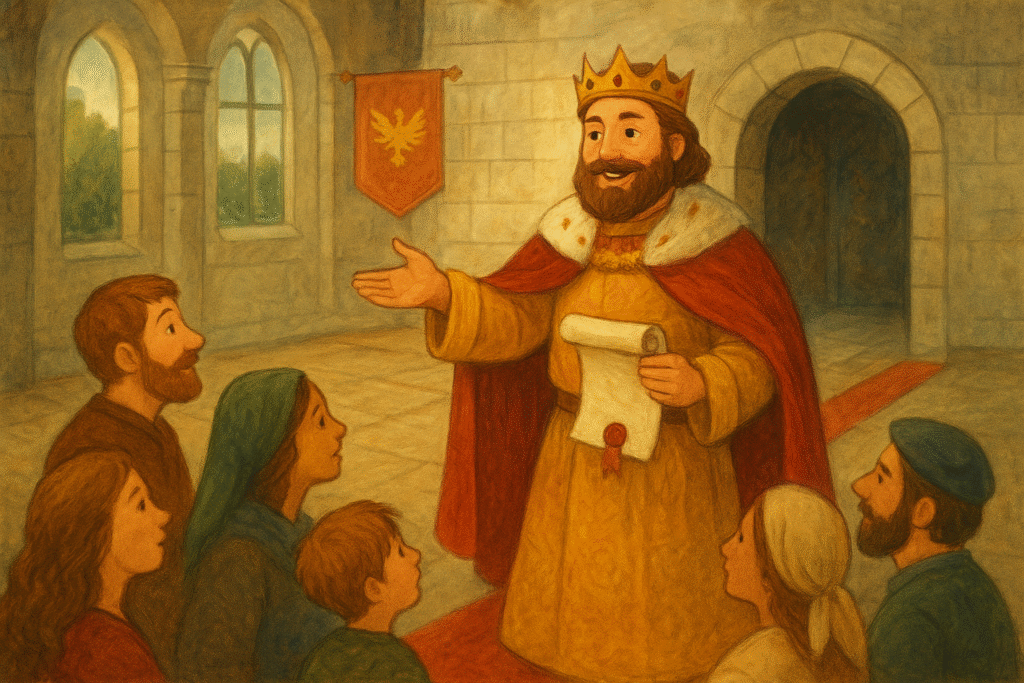
Long ago, in a kingdom nestled between rolling green hills and silver rivers, there lived a wise and generous king named Elias. His crown was simple, his robe unadorned, yet his people loved him more than gold or jewels. For King Elias cared deeply for every person in his land—from the richest merchant to the poorest shepherd.
One day, as autumn leaves began to fall and the harvest came to a close, King Elias decided to host a grand feast in his castle. He wanted it to be more than a celebration of abundance—it would be a reminder of the blessings his people shared, a chance for all to come together in gratitude.
Messengers were sent out across the land with scrolls sealed in blue wax, each bearing the royal emblem of a soaring eagle. The scrolls read:
“By order of His Majesty, King Elias, you are warmly invited to the Feast of Thanksgiving in the Great Hall of Everlight Castle. The feast will be held on the seventh night of the harvest moon. All who are invited will find a place reserved for them. None shall be turned away.”
Excitement rippled through the villages and towns. Farmers, craftsmen, bakers, musicians—all were astonished that the king himself had extended a hand to them.
In each scroll was a note that intrigued everyone:
“At the table of the king, no chair shall remain empty.”
The meaning puzzled many, but none questioned the king. Invitations were clutched like treasures, and plans were made for the journey to the castle.
Chapter 2: The Forgotten Villager
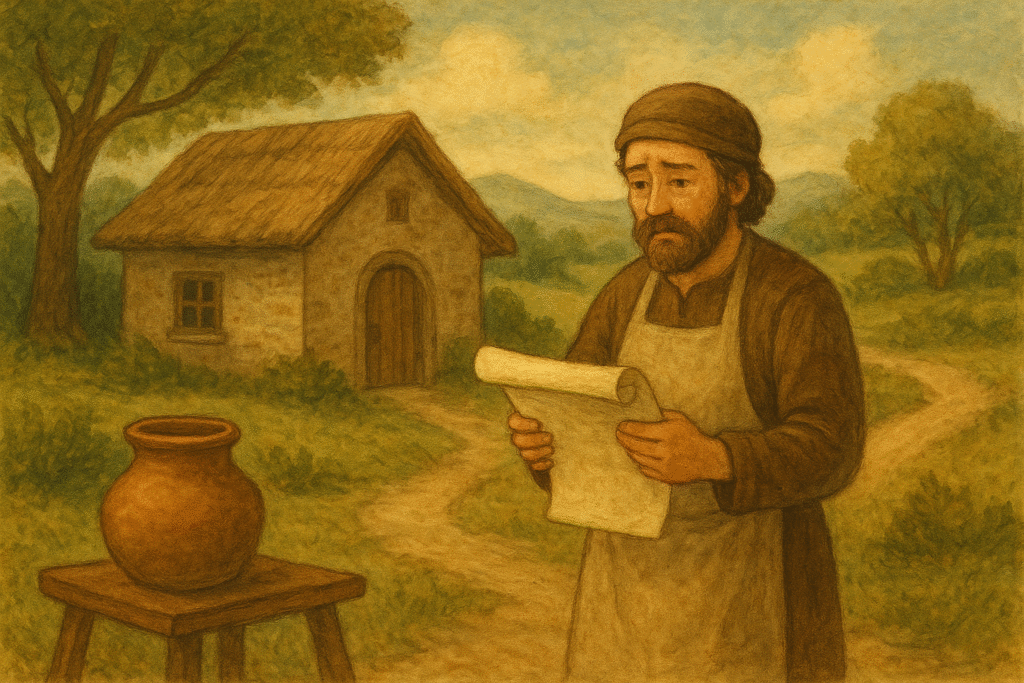
Far from the castle, in a quiet valley where few travelers passed, lived a man named Jonah. He was a humble potter, known for shaping clay into vessels strong enough to hold water and beautiful enough to hold flowers. Yet Jonah was often overlooked by his neighbors. He lived alone in a small cottage, with little more than his kiln, his wheel, and the earth beneath his feet.
When the messengers came, Jonah was away gathering clay near the river. They delivered scrolls to every home but, in the bustle, they forgot the potter’s cottage on the edge of the forest.
As word spread through the valley, Jonah listened eagerly. “A royal feast?” he asked a passing farmer. “Did you say everyone is invited?”
The farmer shrugged. “Yes, I suppose everyone… though I didn’t see you receive a scroll.”
Jonah’s heart sank. If the king had invited everyone, why had he not been remembered? He tried to push away the disappointment. Perhaps I was simply not worthy of a place at the king’s table.
Still, as the days passed, he could not stop thinking about the feast.
Chapter 3: The Feast Begins
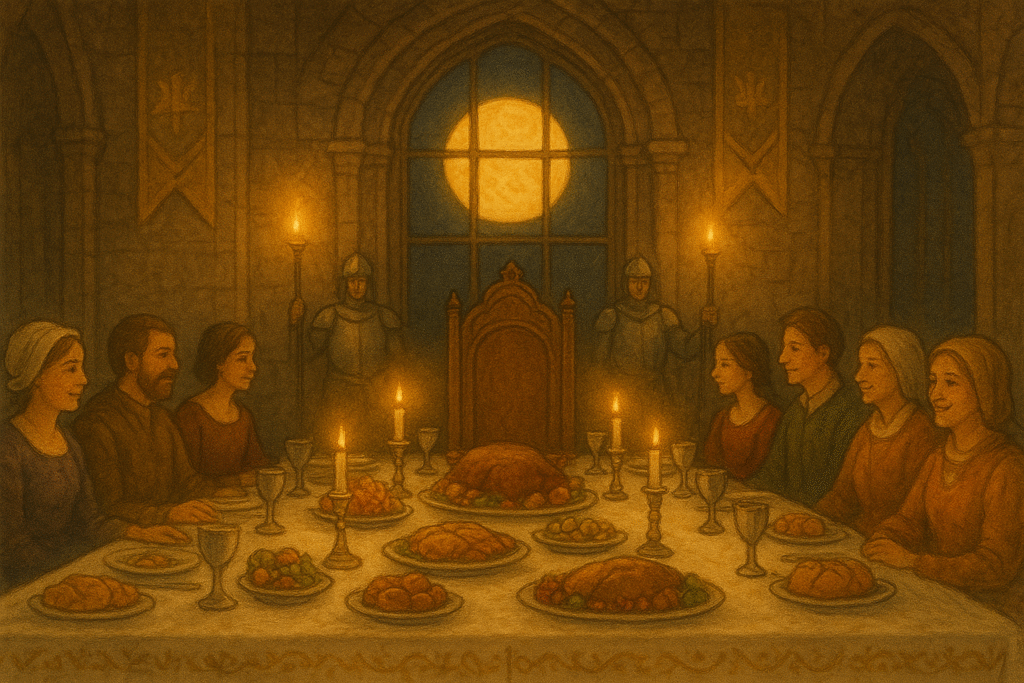
At last, the harvest moon rose—a great golden disc that glowed over the kingdom like a lantern hung by heaven itself.
One by one, guests arrived at the gates of Everlight Castle. Lanterns lit the pathway, and guards in silver armor welcomed villagers and nobles alike. Laughter and music filled the air as people entered the Great Hall.
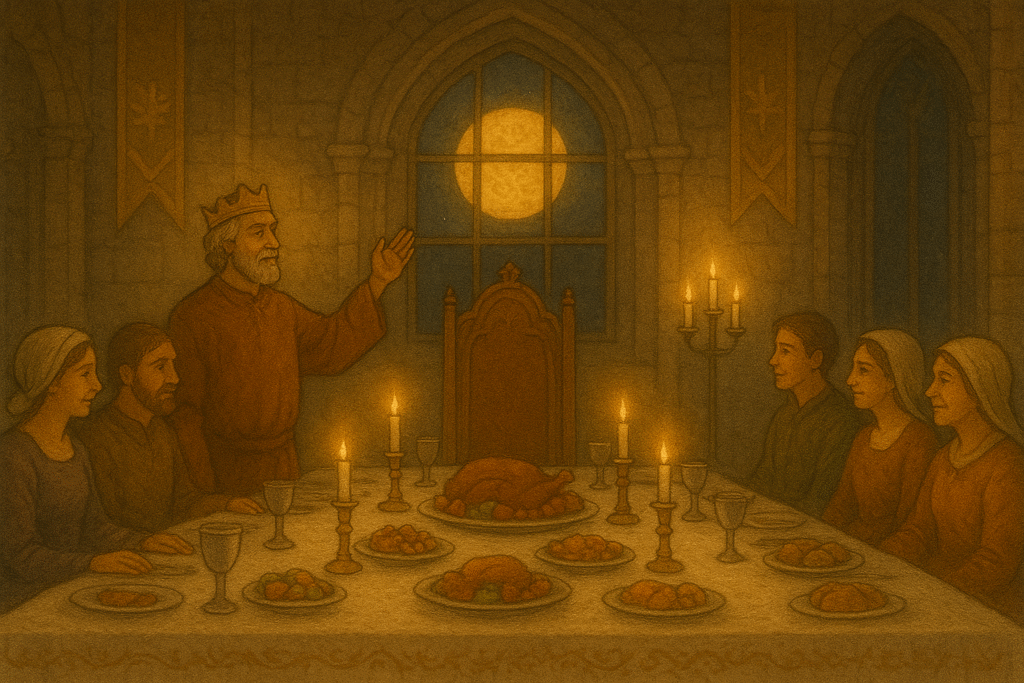
The sight that greeted them was breathtaking. A long table stretched across the hall, covered in white cloth embroidered with golden thread. Silver goblets shone in the candlelight, and platters overflowed with roasted meats, sweet fruits, and loaves of warm bread.
Every chair bore a nameplate, carefully written by the king’s own scribes.
As the guests took their places, they noticed something strange. At the far end of the table sat a large, carved oak chair. Unlike the others, it bore no name.
“Who is that seat for?” whispered a baker’s daughter.
“I suppose it is for a noble who has not yet arrived,” said her mother.
But as the feast began, the chair remained empty.
Chapter 4: The Empty Chair
King Elias entered the hall with a smile, his presence quiet but commanding. He raised his hand, and silence fell over the crowd.
“My friends,” he began, his voice warm, “tonight we celebrate the goodness of the harvest and the bonds of our people. Each of you has a place at my table. Each of you is precious in my sight.”
The guests cheered and clapped.
But then the king’s eyes rested on the empty oak chair. His smile faded.
“Yet I see that one place remains unfilled,” he said softly. “The feast is not complete while even one of my people is missing.”
The hall grew silent. Some shifted uncomfortably in their seats. A merchant muttered, “Surely, Majesty, you cannot expect everyone to come. Perhaps that chair is best left as it is.”
But King Elias shook his head. “Every invitation was sent with care. Every seat was prepared with love. If one remains empty, then one heart has not heard the call—or perhaps has doubted its worth.”
His words stirred the crowd. Whispers spread like wind through the hall. Who had not come? Why had they not answered the invitation?
Chapter 5: Jonah’s Choice
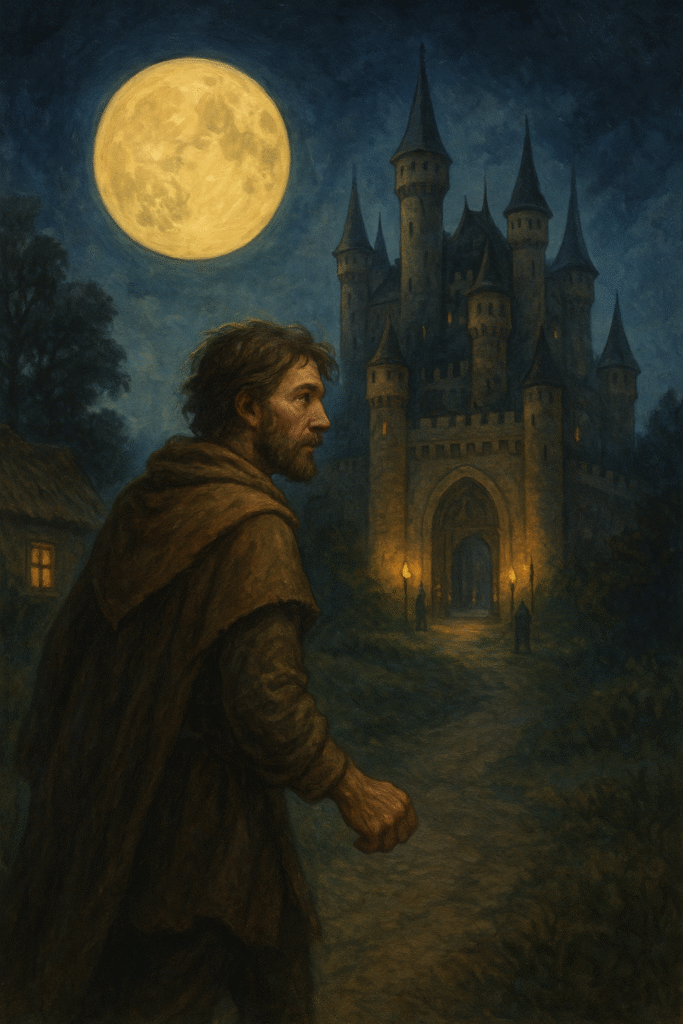
Far away, in his quiet cottage, Jonah sat alone. The moonlight shone through his window, and he could almost hear the music from the castle carried by the night breeze.
He thought of the invitation he had never received, and bitterness filled him. “It was not meant for me,” he told himself. “Why would the king care for a forgotten potter?”
But his heart argued with his mind. He remembered the farmer’s words: ‘Everyone is invited.’
Jonah rose from his chair and looked at his hands, rough with clay. He thought of the vessels he made—humble, yet useful. Could it be that the king truly wanted even someone like him at the feast?
Finally, he took a deep breath, wrapped his cloak around his shoulders, and began walking toward the castle.
Chapter 6: The Search
Back in the hall, King Elias called for his servants. “Go into the streets, go into the villages, go even into the far valleys. Find the one for whom the chair is waiting. Bring them to my table.”
The servants scattered at once, carrying torches into the night.
Hours passed. The feast continued, but the king touched little food. His gaze often drifted back to the empty chair.
At last, just before midnight, the doors of the hall swung open. A servant entered, leading Jonah by the hand.
The potter’s eyes were wide with awe as he beheld the grandeur of the feast. He felt small and unworthy, his cloak dusty from the road.
But the king stood and walked swiftly to him.
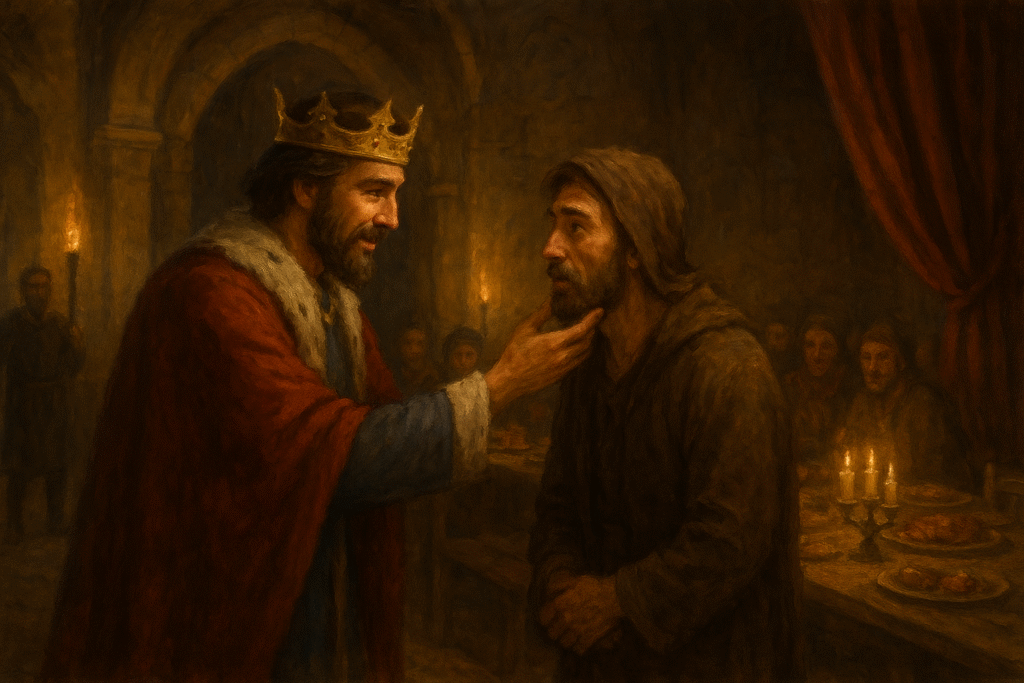
“Jonah,” King Elias said, calling him by name though they had never met. “Why did you delay in coming?”
Jonah bowed low. “Your Majesty, I thought… I thought the invitation was not for me.”
The king lifted Jonah’s chin gently. “The invitation was for all. I sent it with your name written on my heart, though the messenger forgot your door. You are not forgotten, Jonah. You are loved.”
The hall grew silent as the king led Jonah to the empty chair.
Chapter 7: The Feast Completed
As Jonah sat down, a hush fell across the Great Hall. It was as though the final note of a long song had been played, completing the melody.
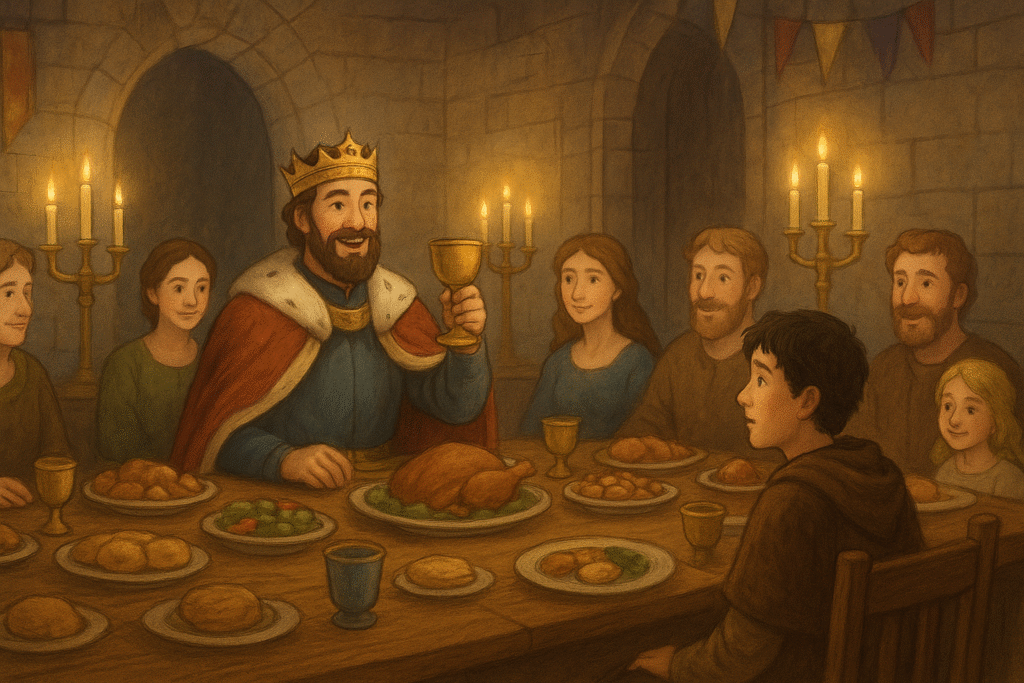
King Elias raised his cup. “Now the feast is whole. For no chair in my hall shall remain empty, and no soul in my kingdom shall be left behind.”
Cheers erupted. Music swelled. Jonah, still overwhelmed, found a plate of food before him and kind faces around him. The baker’s daughter smiled shyly. A farmer offered him bread. Slowly, warmth filled Jonah’s heart.
For the first time in his life, he felt that he truly belonged.
And as the feast carried on into the night, the empty chair was no longer empty. It had been filled by the one who almost thought himself unworthy.
Chapter 8: The Moral
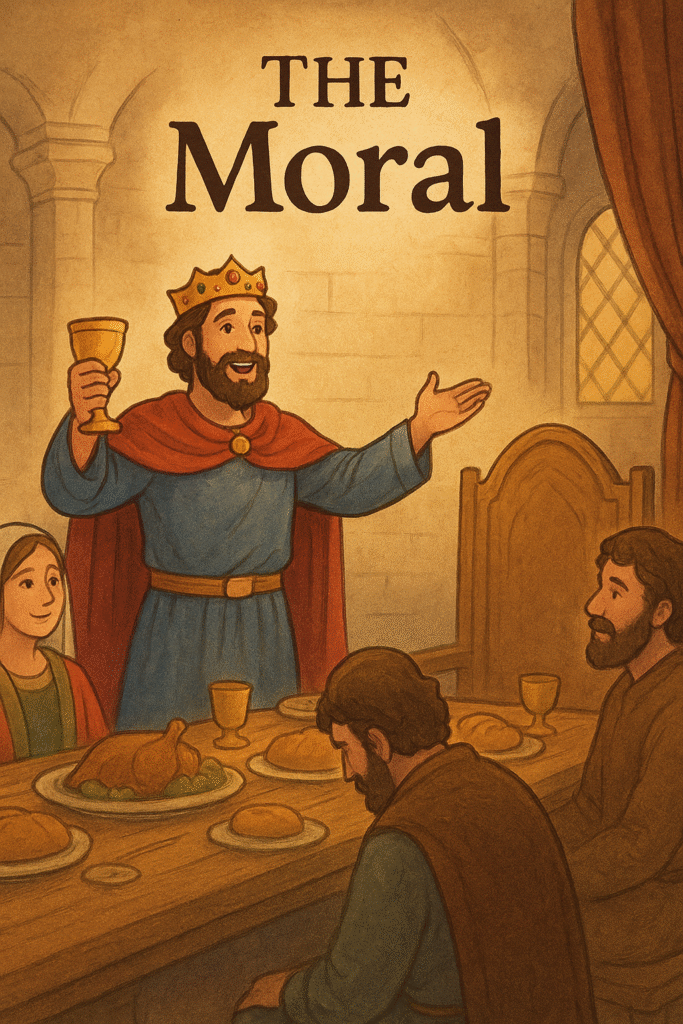
When the feast ended, King Elias spoke once more.
“My people, remember this night. Remember that my table is for all. If one is missing, the feast is not complete. So it is with the kingdom of heaven: many are called, and all are invited. But some doubt, some delay, and some do not come. Still, the King of Kings leaves no seat empty. For His love seeks out the lost, the lonely, and the forgotten, until they are brought home.”
Jonah wept with joy, for he knew the king’s words were true.
And so the story of the empty chair became a lesson passed from generation to generation:
God’s invitation is for everyone. No one is too small, too poor, or too forgotten. The feast of His kingdom is not complete without you.
For More Interesting Stories, Click |Here